VisionMix: Loss & Transience 2 – film programme and artists

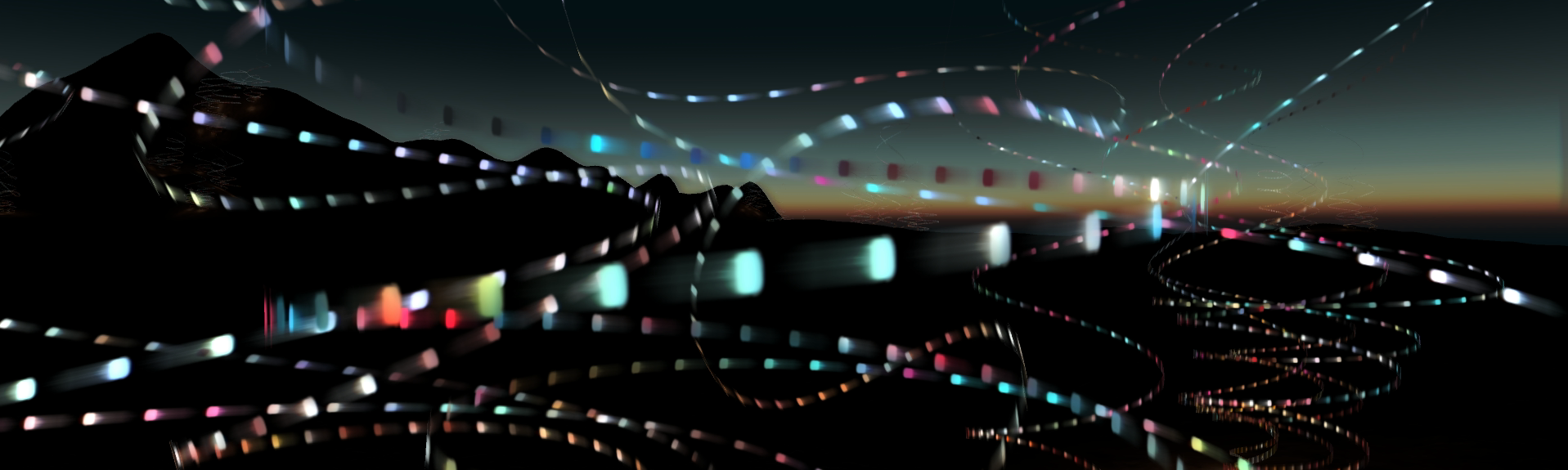
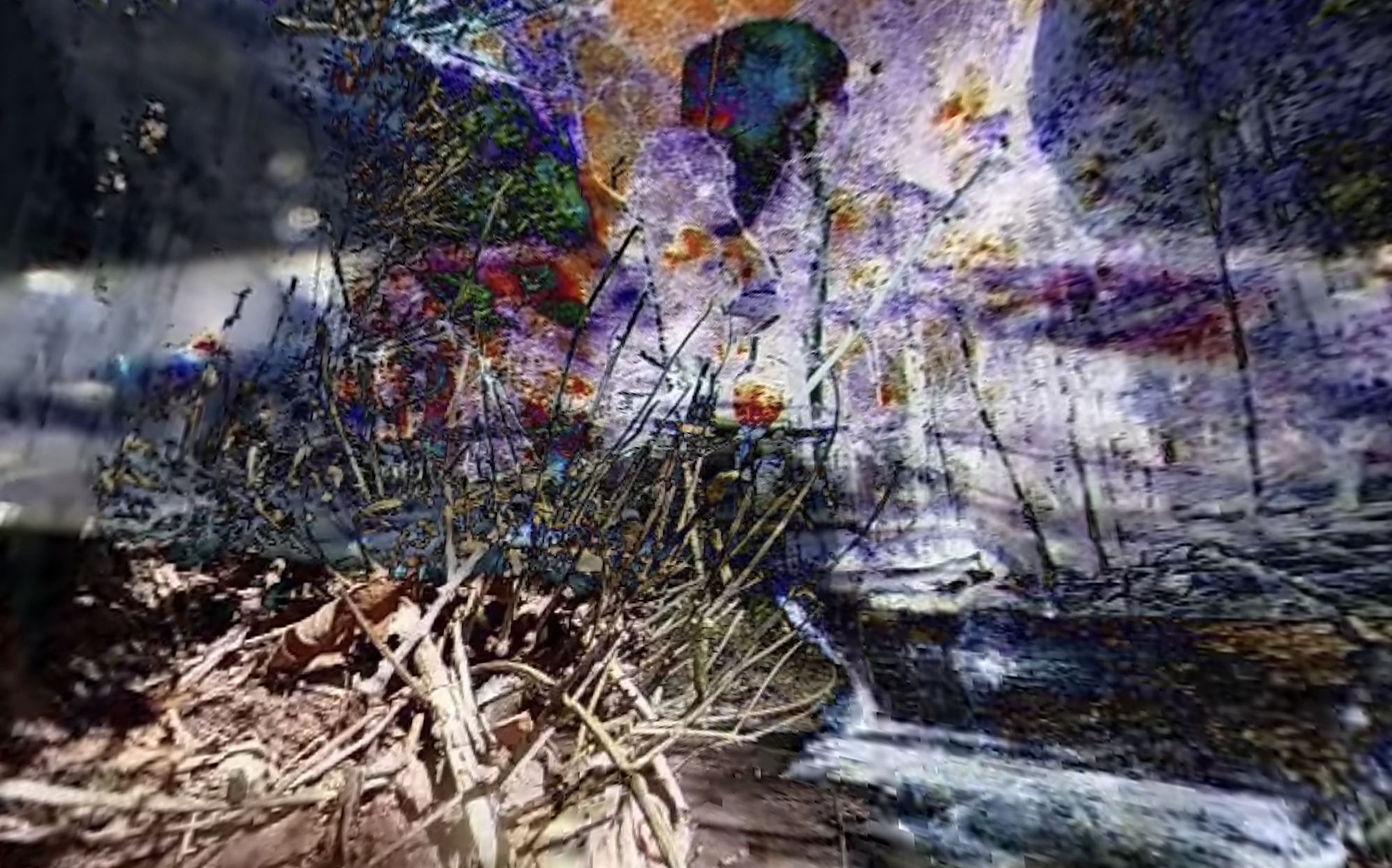
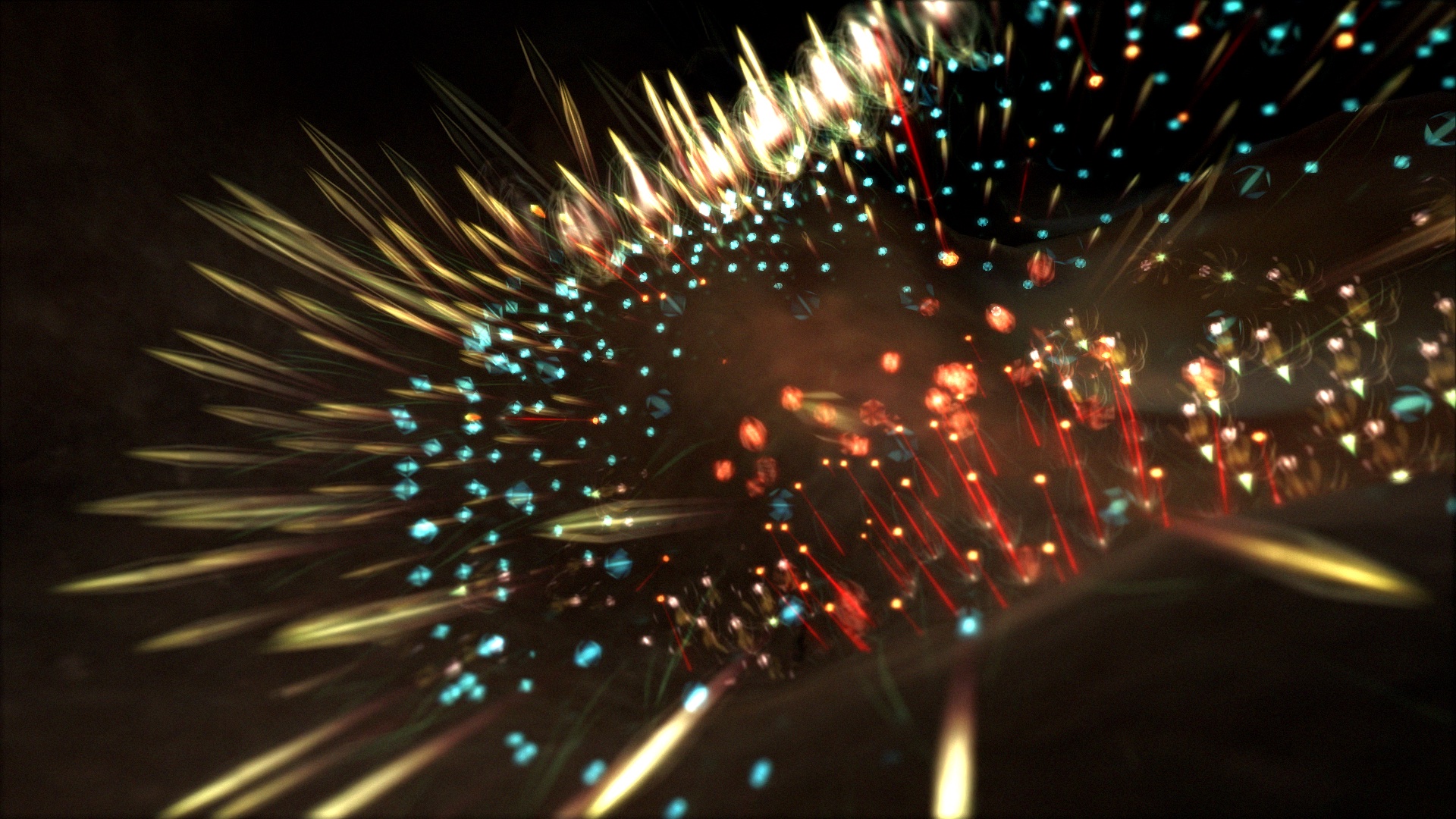
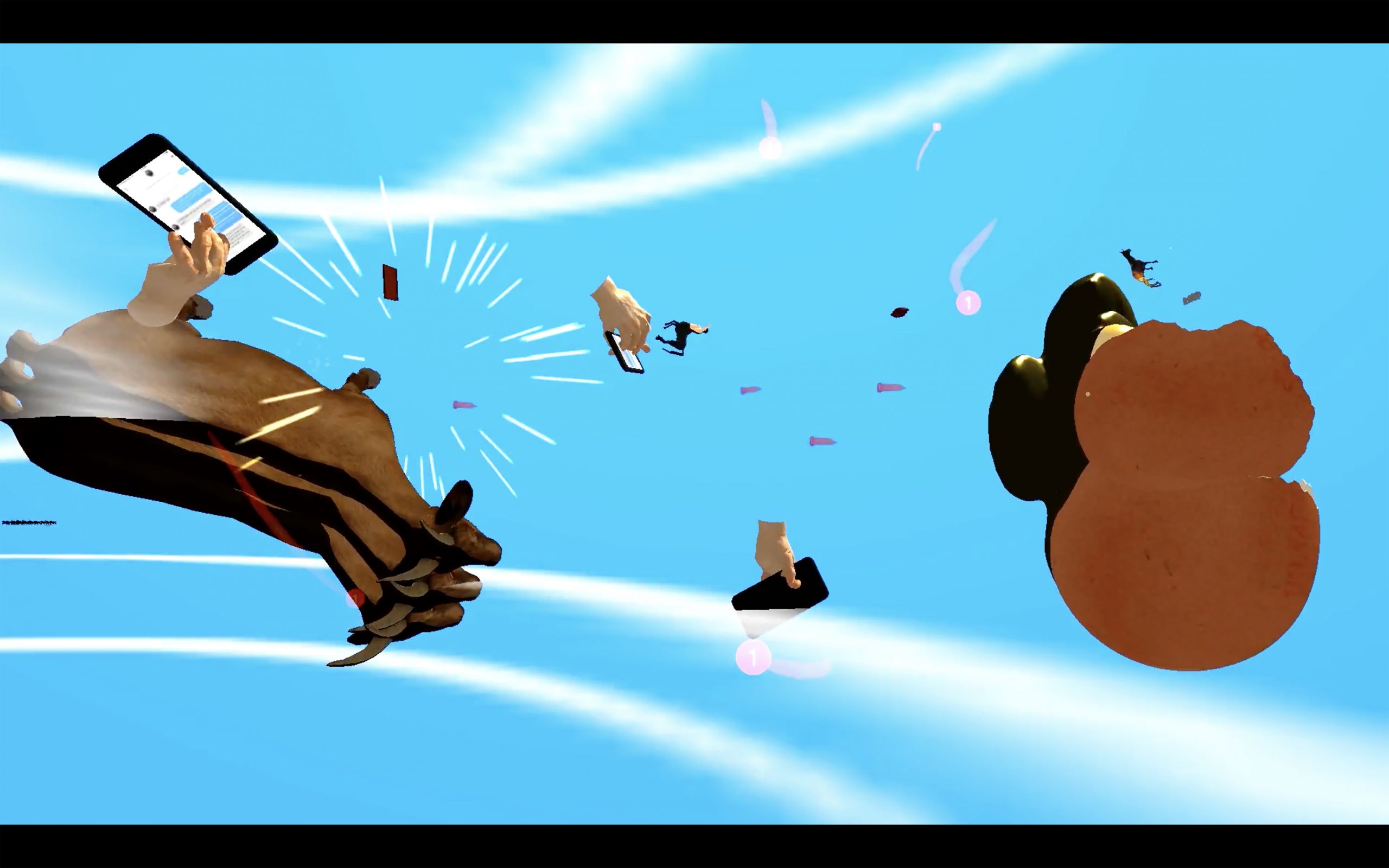
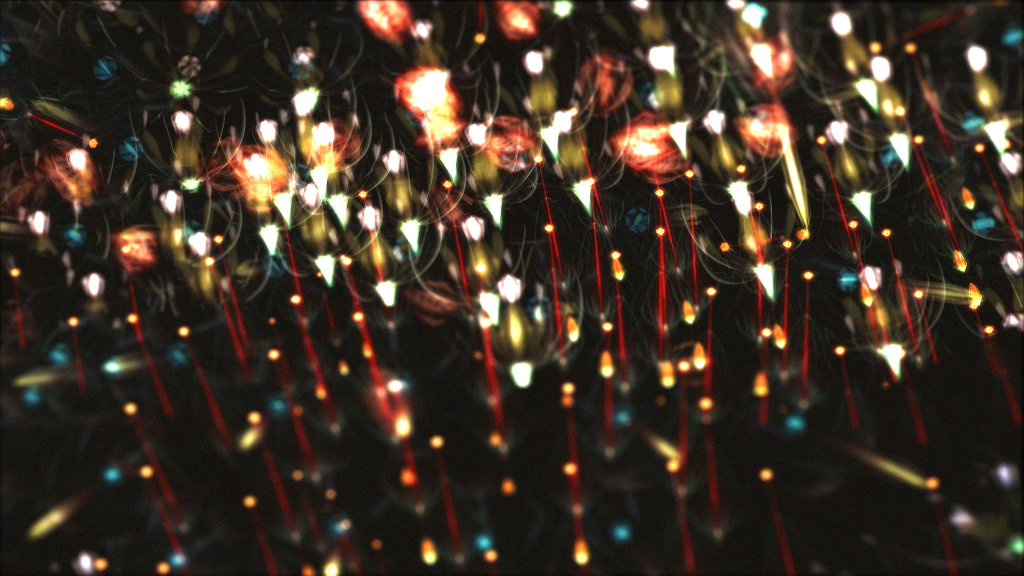
Bright cut up patterns float in space, rich oranges, reds, blues, yellow - in the front is a patchy area of deep lime green.

VisionMix: Loss & Transience 2

Loss & Transience 2 brings together the work of five contemporary artists/filmmakers who are living and working in India today, and artists of Indian heritage based internationally. 

Watch the films now, click here.

The films are linked by their protagonists’ state of transience at key moments within the films providing numerous insights into how day-to-day realities are being catalysed to affect change, but also to reflect on present political and environmental concerns. Collectively the films are examples of rendering new worlds through improvisation which cannot exist ‘in the real world’; an approach that is re-constructive and playful; allowing for adaptation to the challenges of the environment whilst critically questioning our role within it.

The programme is curated by VisionMix‘s curators, Lucía Imaz King and Rashmi Sawhney, and presented in collaboration with videoclub.

Loss & Transience 2 coincides with an exhibition at Hong-gah Museum in Taipei.

Programme of online talks

A curators and artist’s talk – about this programme – will take place on 20 March 2021, click here for details.

A 2nd talk will take place about the exhibition at Hong-gah Museum on 27 March 2021, click here for details.

Artists and film programme (showing 19 – 27 March: watch here)

Ranbir Singh KalekaMan with Cockerel, 2004 (5:42 mins)
Ranbir Singh KalekaForest, 2007 (11 mins)
Avijit Mukul KishoreThe Garden of Forgotten Snow, 2017 (30 mins)
MochuWake, 2008 (13:44 mins)
Ranu MukherjeeHome and the World, 2015 (5 mins)
Gigi ScariaNo Parallels, 2010 (6:42 mins)
Gigi ScariaPolitical Realism, 2009 (3:35 mins)


Ranbir Singh Kaleka, Man with Cockerel, 2004

This looping film operates by creating unexpected ellipses of time in the image of a man who stands, half submerged in water, holding a cockerel in his arms. The cockerel repeatedly escapes his grasp and flies out of shot, reappearing only to be captured again. The composition of the film frame (in black and white) resembles a moving painting in which particular elements of the image are singled out to be distorted, or to subvert our expectations of how the sound and the image relate to one another. The man departs from our view whilst, illogically, his reflection remains attached to the water’s surface.

Time is reversed when a heron enters, and then walks backward out of the scene. The sound track does not offer the meditative calm that would ‘fit’ this lake-side scene. Instead, we hear a clatter of mechanical and industrial sounds that displace our viewing. Kaleka’s video-artwork indicates how precarious the moment is, in which we subject an image to our interpretation, but it highlights too how precarious the role of the artist is when faced with creating a new reality in an artwork. Man with Cockerel is an “allegory on the tantalizing grasp of desire” which continually eludes us, as the art critic, Geeta Kapur observes.

Ranbir Singh Kaleka, Forest, 2007

In this work, a library of books stands improbably in a clearing in the forest, symbolising ‘a library of knowledge.’ A lion enters, becoming the guardian of this knowledge but also, representing a mythical, other-worldly creature of the imaginary. The lion is driven away as the library is set on fire. Finally, a young lion returns to the city that emerges from the ashes of the scene. Flowers rise from the burnt ground.

In this visionary and poetic video artwork the ‘hidden atrocities’ that take place in this animated painting are suggested rather than explained. It becomes a statement about a collective destruction of the environment, and of generational knowledge and wisdom passed through centuries and across cultures for which we must all atone.

Biography – Ranbir Singh Kaleka

Ranbir Singh Kaleka is a leading Indian contemporary artist who trained at the Punjab University, Chandigarh and at the Royal College of Art (London). He initially established himself as a painter depicting every-day scenes from Indian life that are infused with mythical, oneiric and visionary reality. From the 2000s onwards he became a well-recognised pioneer of video and moving image, contributing substantially to the generations that followed him.

A key body of his early video works explore how the temporality that exists in painting (as an art form) can be captured and transposed into the medium of cinema, including the convention of ‘video loops’. This led to a series of works in which he projected slowly animated film images on top of canvases that were already painted on with a ‘ghost image’. This technique creates a moment of realisation and focus around how moving image and painting interrelate, both in one’s perception of the image, and art historically.

The concept of memory, and the poetics of place are also key to Kaleka’s video artworks. Several of his installations have investigated the demise of displaced people and environmental concerns. Examples of this are, House of Opaque Water (2010), which explores the experience of a survivor of a flood in the Bangladesh Sundarban marsh region, and Crossings (2005), which references the migration history of Sikh communities from the Punjab to other regions of India. A recent key exhibition of Kaleka was titled, Tah-Satah, curated by Ashish Rajadhyaksha. Kaleka currently lives and works in New Delhi.

Avijit Mukul Kishore, The Garden of Forgotten Snow, 2017

The Garden of Forgotten Snow looks at the art practice of Nilima Sheikh and her engagement with the multiple histories, literary references and artistic traditions of Kashmir. The film comes out of two decades of engagement between the artist and the filmmaker.

Sheikh is an eminent artist who studied painting at the Faculty of Fine Arts, Baroda, India. She belongs to the Narrative-Figurative tradition of painting that broke away from the prevalent trend of Modernist Abstraction in the early 1980s, to focus on subjects that were local, personal, dealing with gender and feminism. Sheikh has a long association with Kashmir, a land of beauty and luxury, unfortunately known in recent times for its history of separatist strife and conflict. 

Biography – Avijit Mukul Kishore

Avijit Mukul Kishore is a filmmaker based in Mumbai. He studied cinematography at Film and Television Institute of India, Pune and holds a bachelor’s degree in History from Hindu College, University of Delhi. He works in documentary films and inter-disciplinary moving-image practices, both film-based and digital. He frequently collaborates with other visual artists, architects and academics on video and film-based works. He is involved in cinema pedagogy as a lecturer, writer and curator of film programmes. His works have been shown at Documenta 14, Chicago Architecture Biennial, Pinakothek-Moderne Munich, Kochi-Muziris Biennale and Dhaka Art Summit in addition to international film festivals including CPH Dox, Sheffield Docfest, Dok-Leipzig, Documenta Madrid and various academic and cultural spaces.

Mochu, Wake, 2008 

A remote village in the desert, inhabited by fleeting humans, guarded by a dreaming puppet. Flies buzz around a crashed time-machine. Noise particles infest thought and emotions. Guided by birds, dead and alive, a man discovers the time-machine’s flight recorder, and the memory of the village flows out.

Biography – Mochu

Mochu works with video and text arranged as installations, lectures and publications. Techno-scientific fictions feature prominently in his practice, often overlapping with instances or figures drawn from art history and philosophy. Recent projects have explored mad geologies, psychedelic subcultures and Indian Modernist painting. Mochu is a recipient of the Edith-Russ-Haus grant for Media Art 2020 and his practice has previously been supported by Ashkal Alwan, India Foundation for the Arts and The Sarai Programme. Exhibitions include 9th Asia-Pacific Triennial, Sharjah Biennial 13, 4th Kochi-Muziris Biennale, Alserkal Avenue, Kiran Nadar Museum of Art and Transmediale BWPWAP. He is currently based in Delhi and Istanbul.

Ranu Mukherjee, Home and the World, 2015

Home and the World takes as it’s starting point the corridor scene from the filmmaker Satyajit Ray’s 1984 cinematic adaptation of Rabindranath Tagore’s 1916 novel Ghare Baire (‘The Home and the World”), in which the female protagonist passes through from domestic chambers, to enter the civic life of a nascent post-colonial India. Mukherjee’s film depicts the colonial corridor architecture falling apart and being replaced by bamboo scaffolding; a hallmark of contemporary Mumbai and the capitalist economies of the early 21st century. A woman sweeps up the debris, creating a transition between eras. In each, an identical series of female figures walks forwards, some protesting violence against women. The figures represent complex intersections between modernization and the ongoing social struggles and resilience of women. Home and the World is composed and animated from photographic, digital and painted imagery. Its slow deliberate rhythm is built through overlaying distinct types of motion.

Biography – Ranu Mukherjee

Ranu Mukherjee makes hybrid work in moving image, painting and installation to build new imaginative capacities. She is guided by the forces of ecology and non-human agency, diaspora and migration, motherhood and transnational feminisms – drawing inspiration from the histories of collage, feminist science fiction and Indian mythological prints.

Mukherjee has produced commissioned projects for the San Jose Museum of Art, the Los Angeles Museum of Contemporary Art, the Asian Art Museum, the de Young Museum, the 2019 Karachi Biennale, Yerba Buena Center for the Arts, and the San Francisco Arts Commission. Current awards include a Pollock Krasner Foundation Grant, a Lucas Visual Arts Fellowship and an 18th Street Arts Center Residency. Mukherjee is represented by Gallery Wendi Norris.

Gigi Scaria, No Parallels, 2010

No Parallels has two frames running parallel to each other. The frame on the left side features archival images of Mahatma Gandhi, including images of his personal moments; being surrounded by people, leading political movements, and also the lonely moments of meditation and silence.

These images have been constructed as flip cards and appear one after the other. The final image that appears on the screen is a hundred rupee note with the image of Gandhi.

The frame on the right side has images of Mao Zedong. This too displays selected archival images of important moments in Mao’s life. There is an attempt to trace similar kind of images from the life of both leaders. For example, the long march of Mao is shown parallel to the salt march of Gandhi. The final image on the right side of the projection has a hundred Yuan Chinese currency with the image of Mao.

It is an attempt to understand the psyche of two nations through their historical narratives. These two personalities have contributed their best to create the modern India and modern China. In terms of historical time, personal values, political philosophy and the impact on the people of their country M.K. Gandhi and Mao Zedong stand in two different poles. These historical icons, when placed next to each other certainly create a serious discourse on the project of nation building and its impact on contemporary psyche.

Gigi Scaria, Political Realism, 2009 

This video artwork deals with the regime shift and the cycles of change of an era. Within the last thirty years, a drastic change has taken place in the realms of politics, economics and culture. Suddenly the world looks different for many, including for old and new generations.

Ideologies and resistance systems which were actively propagated by the different power structures lost its grip due to the advent of a new humanity. At the same time, it also left us with doubt about how to reconstruct a new ‘moral code’; a big question of its survival in the immediate future. Political Realism brings this confusion to every single home and recollects the memory of the past to analyze the impermanence of all great power structures of the present, as well as many more yet to come.

Biography – Gigi Scaria

Born in 1973, Kothanalloor, Kerala, Gigi Scaria completed his Master’s degree in painting from Jamia Millia University. His work draws the viewer’s attention towards the painful truths of migrancy and displacement and the paradigms of development through his intense investigation of urban topographies and modern city structures. He is also concerned with the intended and unintended consequences of these developments for urban residents and the communities that make up, and divide them. Issues of alienation and unsettlement reverberate within the labyrinthine buildings of his canvases and the uncanny structures of his sculptures and installations. “Gigi’s particular position is to investigate how city structures, social constructs, and the view of location is translated in social prejudice and class attitude,” says art critic Gayatri Sinha. His recent exhibitions include BRUISED: Art action and ecology in Asia (2019) at RMIT University Gallery, Melbourne, Australia (2019); 

Fotofest Biennial Contemporary Photographic & New Media Art, Huston, Texas, USA (2018); ‘Iconic Interruptions, Selected works by Gigi Scaria, 2007-2015’, Frederic Jameson Gallery, USA (2017); Dwelling Pluralities, a collateral event of Kochi Muziris Biennale, Kochi, India (2016); Time, Site & Lore, Denmark (2016). Gigi Scaria lives and works in New Delhi.


Curated by Lucia Imaz King and Rashmi Sawhney for VisionMix.

Supported by University of Brighton.

VisionMix: Loss & Transience 2 – curators and artist’s talk

Webinar: Curators and artist’s talk – VisionMix: Loss & Transience 2

The talk took place on 20 March 2021.

Loss & Transience curators (VisionMix), Lucía Imaz King and Rashmi Sawhney introduce the exhibition with videoclub director, Jamie Wyld. Followed byartists, Gigi Scaria and Mochu talking about their work.

Find out more about the Loss & Transience programme, artists and films.

A second talk takes place with Hong-gah Museum on 27 March 21, see here for details.

Supported by University of Brighton.

VisionMix: Loss & Transience – curators and artists’ talk hosted by Hong-Gah Museum

Avijit Mukul Kishore, The Garden of Forgotten Snow, 2017 (film still, courtesy of the artist)

Artists and curators’ talk delivered by Hong-Gah Museum

Date: Saturday 27 March

Time: 11:00 – 12:30 (UK), 16:30 – 18:00 (India) and 19:00 – 20:30 (Taiwan)

Link: for talk with Hong-Gah Museum

Join for an introduction to the exhibition, Loss & Transience, with Zoe Yeh (Director, Hong-Gah Museum), Lucía Imaz King & Rashmi Sawhney. Followed by a talk between filmmakers Avijit Mukul Kishore and visual artist, Nilima Sheikh about their collaboration on the film, Garden of Forgotten Snow, and Nilima Sheikh’s painting practice.

Find out more about the Loss & Transience programme, artists and films.

A curators and artist’s talk takes place on 20 March 21, see here for details.

Supported by University of Brighton.

Both Sides Now 6: Viral Futures films – part 2: Body/Politics

VIRAL FUTURES – Part 2: Body/Politics film programme

The programme can be watched in two ways – the full programme (all five films, 44 mins) can be watched in the first video, or you can choose to watch individual films below.

For information about the programme, click here. And to learn more about the filmmakers and their films, click here.

Viral Futures, part 2 – full programme

Featuring the following work:

Adrian Garcia Gomez – Primavera, 2020 (5 mins)

John Walter – A Virus Walks Into a Bar, 2018 (20 mins)

白雙全 Pak Sheung Chuen – Breathing in a House, 2006 (6:14 mins)

蔡琪玟 Cattin Tsai – Memes 2020, 2020 (3:18 mins)

陳品陶 Chen Pin Tao – Temple of Physiotology, 2019 (8:46 mins)


Adrian Garcia Gomez – Primavera, 2020 (5 mins)


John Walter – A Virus Walks Into a Bar, 2018 (20 mins)


白雙全 Pak Sheung Chuen – Breathing in a House, 2006 (6:14 mins)


蔡琪玟 Cattin Tsai – Memes 2020, 2020 (3:18 mins)


陳品陶 Chen Pin Tao – Temple of Physiotology, 2019 (8:46 mins)


Arts Council England funding logo (Lottery)

Both Sides Now 6: Viral Futures – film programme (part 1)

VIRAL FUTURES – Technology / Politics film programme

For information about the programme, filmmakers and films, click here.

徐世琪 Angela Su – Cosmic Call (2019)


Bob Bicknell-Knight – There are already 35 server farms on Mars. It is the perfect temperature. (2017)


陸揚 Lu Yang – Cancer Baby (2014)


Laura O’Neill – AGAIN AGAIN AGAIN (WHY I FEEL SICK WHEN I WAKE UP)  (2018)


Clifford Sage – Buddha Geometry Brain Toy (2017)


Arts Council England funding logo (Lottery)     

Artists – Both Sides Now 6: Viral Futures

Chen Pin Tao, Temple of Physiotology, 2019 (video still, courtesy of the artist)

videoclub and Videotage (Hong Kong) are excited to present Both Sides Now 6: Viral Futures, the latest edition of our long-term annual project. This edition aims to reflect on life with/after COVID-19 and explores how viruses continually affect our present and future. With events including digital residencies, physical and online screenings, and talks from November 2020 to February 2021.

For details and links to the programmes: Both Sides Now 6: Viral Futures

Artists in the programme are: Adrian Garcia Gomez, Angela Su, Bob Bicknell-Knight, Cattin Tsai, Chen Pin Tao, Clifford Sage, John Walter, Laura O’Neill, Lu Yang and Pak Sheung Chuen.

Artists and programme of films

徐世琪 Angela Su – Cosmic Call (2019)

Angela Su’s Cosmic Call sees the virus as a cephalopod spreading its tentacles across astronomy, borders, and archives. Cosmic Call was commissioned by the Wellcome Trust for the Contagious Cities project in early 2019, the timing of which only seems prescient now with COVID-19. Cosmic Call proposes an alternative to the western medicine-centric outbreak narrative of epidemics, and explores the cosmological and extra-terrestrial origin of infections and diseases based on a review of ancient manuscripts and a critique of Chinese medicine. The video ends with the artist injecting herself with different kinds of virus and bacteria, thereby becoming one-and-multitude with the viral paradoxes, an origin story and an end-game scenario at once.

Angela Su’s biography

Angela Su received a degree in biochemistry in Canada before pursuing visual arts. Su’s works investigate the perception and imagery of the body, through metamorphosis, hybridity and transformation. Through her performance-based works such as The Hartford Girl and Other Stories (2012) , she investigates the tension of the artist’s dualistic state of being when under physical endangerment or distress. Cosmic Call (commissioned by Wellcome Collection in 2018) and The Afterlife of Rosy Leavers (2017) include drawings, videos, performative and installation works that explore the interrelations between our state of being and the advancement of technology. Central to these projects are video essays that weave together fiction and facts. Archival photographs, prints and film footages are systematically used by the artist to create a realm that oscillates between reality and fantasy. With focus on the history of medical science, her works challenge the dominant belief systems and contemplate the impact of technology on the past, present and future.

In recent years, Angela began to explore science fiction as her creative medium. In 2013, she published an artist novel Berty, and in 2017, a science fiction anthology Dark Fluid where she uses science fiction as a tool for social justice.

She has participated in “Sala10” (Museo Universitario Arte Contemporáneo, Mexico, 2020); “Meditations in an Emergency” (Ullens Center for Contemporary Art, Beijing, 2020); “Contagious Cities” (Commissioned work by Wellcome Trust, at Tai Kwun, Hong Kong, 2019); “Woven” (curated section of Frieze London, 2019); “Artists’ Film International” (Whitechapel Gallery, London, 2019); “Pro(s)thesis” (Academy of Fine Arts Vienna, Austria, 2017); “The 2nd CAFAM Biennale: The Invisible Hand” (CAFA Art Museum, China, 2014); “17th Biennale of Sydney” (Museum of Contemporary Art, Australia, 2010).

Bob Bicknell-Knight – There are already 35 server farms on Mars. It is the perfect temperature. (2017)

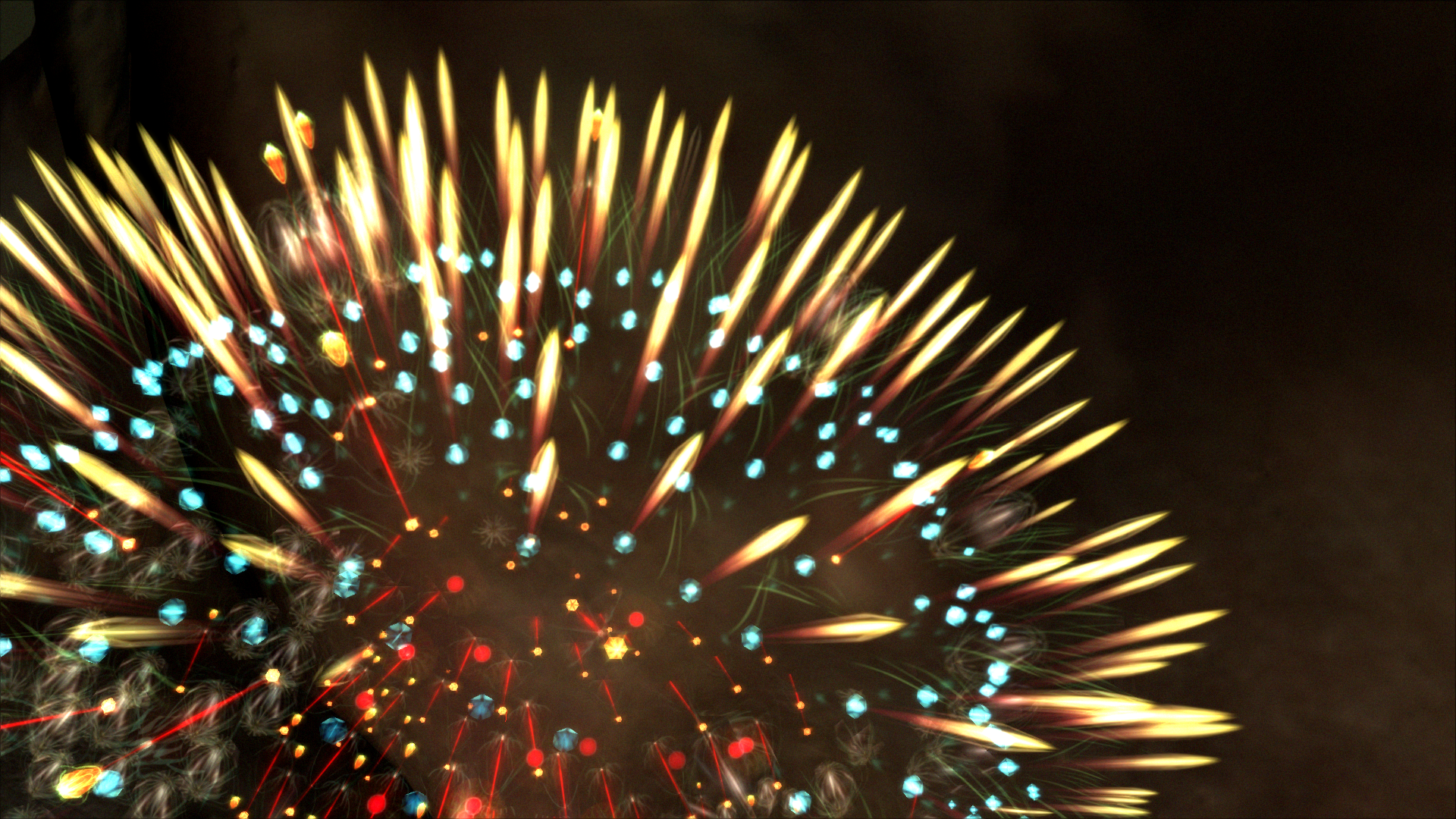
There are already 35 server farms on Mars. It is the perfect temperature is a looping film that explores ideas of digital escapism in the post-truth era. The piece utilises found footage taken from YouTube, a video sharing platform, accompanied by a voice actor commissioned through Fiverr, an online marketplace commonly used by corporations for adverts, reading a speculative script considering how our lives are becomingly increasingly digitalised. Groups are are now seen as a commodity, a new form of currency akin to Bitcoin or Litecoin, enabling the creation of a safety net around our physical bodies that thrives on simulating fear surrounded by fake news, letting our digital selves run wild and free with the help of VR and future technologies.
Bob Bicknell-Knight’s biography:

Bob Bicknell-Knight (b. Suffolk, UK) is a London based artist, curator and writer, working in several mediums including installation, sculpture, video, and digital media. His work is influenced by surveillance capitalism and responds to the hyper consumerism of the internet. Utopia, dystopia, automation, surveillance and digitization of the self are some of the themes that arise through his critical examination of contemporary technologies.

Bicknell-Knight is also the founder and director of isthisit?, a predominantly online platform for contemporary art, exhibiting over 800 artists since its creation in May 2016.

Selected solo and duo exhibitions include Pickers at Industra, Brno (2021), Bit Rot at Broadway Gallery, Letchworth (2020), The Big Four, duo show with Rosa-Maria Nuutinen at Harlesden High Street, London (2019), Wellness, Ltd., duo show with Erin Mitchell at Galerie Manque, New York (2019), State of Affairs at Salon 75, Copenhagen (2019), CACOTOPIA 02 at Annka Kultys Gallery, London (2018) and Sunrise Prelude at Dollspace, London (2017).

Bicknell-Knight has spoken on panel discussions and given artist talks at Contemporary Calgary, Canada (2020), Tate Modern, London (2019), University of Cambridge, Cambridge (2019), Camberwell College of Arts, London (2019) and Goldsmiths, University of London, London (2018).

A brightly coloured videogame graphic of imagined cancer cells - 3 cells smile out at the viewer, 2 smaller on the left and right flanks of a central pink, yellow and green cell, the 2 on the outisde are purple. They look a little like fat octopuses. They are on a green globe. Above in pale acid green in bubble capital letters it says 'cancer baby'.

陸揚 Lu Yang – Cancer Baby (2014)

Using videogame animation, Lu Yang has metamorphosed cancer cells into animated characters in dazzling colours. The beguiling beauty of the characters, typical of Lu Yang’s artistic approach, forefronts the irony and cruelty of the real world that must be navigated.

Lu Yang’s biography

Lu Yang (b. Shanghai, China) is a multi-media artist based in Shanghai. Mortality, androgyny, hysteria,  existentialism and spiritual neurology feed Lu’s jarring and at times morbid fantasies. Also taking  inspiration and resources from Anime, gaming and Sci-fi subcultures, Lu explores his fantasies through  mediums including 3D animation, immersive video game installation, holographic, live performances,  virtual reality, and computer programming. Lu has collaborated with scientists, psychologists, performers,  designers, experimental composers, Pop Music producers, robotics labs, and celebrities throughout his  practice. 

Lu Yang has held exhibitions at UCCA (Beijing), MWoods (Beijing), Cc Foundation (Shanghai), Spiral  (Tokyo), Fukuoka Museum of Asian Art (Fukuoka, Japan), Société (Berlin), MOCA Cleveland (Cleveland,  Ohio). He has participated in several international biennials and triennials such as 2012 & 2018 Shanghai  Biennial, 2018 Athens Biennale, 2016 Liverpool Biennial, 2016 International Digital Art Biennale  (Montreal), Chinese Pavilion of the 56th Venice Biennale, and 2014 Fukuoka Triennial. In 2019, Lu  became the 8th BMW Art Journey winner and started the Yang Digital Incarnation project.

Laura O’Neill – AGAIN AGAIN AGAIN (WHY I FEEL SICK WHEN I WAKE UP)  (2018)

Hard times for beings of the sensitive kind, tentacles groping for new attachments to be made.

In this short animation, a lone character (myself) crosses Europe during a degenerated mid-apocalyptic Brexit delirium (2018). Where things, data, people and other species move around, with greater or lesser difficulty – because they want to, need to, or ‘just do so’; navigation rather than position becomes key to identity across a horizontal plane of possibilities. Spatiality through virtual movement and labour; dust covered words reappear into a tangled stare and somehow we cannot go back again. Laced with a personal narrative about family and life during the last few years.

Laura O’Neill’s biography

Laura O’Neill (b.1990, Wigan, UK) is always making something; sometimes animations, sometimes AR filters, sometimes sound, sometimes sculptures, sometimes video games, sometimes she works with others and sometimes she works for other people. Her recent commission, Rise is a WW2 Memorial for the Memory of the Crew Lost in Action, due to be unveiled in 2021 in Almere, NL. Selected screenings include: ICA, London; Home, Manchester; Spike Island, Bristol; CCA, Glasgow; Hiroshima International Animation Festival, Japan; Tramway, Glasgow and Centro De Cultura Digital, Mexico D.F. O’Neills work is included in private collections and public collections including De Rechtbank, Amsterdam and the Gemeente Almere, NL.

Clifford Sage / recsund – Buddha Geometry Brain Toy (2017)

In Buddha Geometry Brain Toy we see ProDance® navigate a small array of passages in a vast wasteland. He is accompanied by his long lost fear, the Xenomorph. But instead of running from Xenomorph, he moves to confront his fear. The planet he’s on is riddled with an abundance of multidimensional tools. One being a rudimentary teleportation centre created by a past human race. A technology that allows one to teleport beyond the speed of light, and in the process saves and formats the body and soul.
Clifford Sage’s biography

Clifford Sage is a CGI moving image artist based in London. Often working with animation and virtual world building, Sage explores audio interaction and non-linear storytelling through game engines. Since graduating in Visual Communications from the Royal College of Art in 2010, Sage has collaborated and worked with many artists over the years, recently with Iain Ball, Lawrence Lek, Lee Gamble, Sidsel Hansen, Candice Lin, and has appeared on the cover of Wire magazine as part of Quantum Natives. Recent projects include Tuner, which has been exhibited and performed at Somerset House Studios, London (2018), Club Adriatico, Ravenna, IT (2018) and LEV Festival, ES (2019).

Adrian Garcia Gomez – Primavera (2020)

Primavera is a frenetic experimental animation that documents the pandemic and the Black Lives Matter protests as they intersect in springtime Brooklyn.  Shot during isolation on a phone, the video explores the effects of imposed distance on touch and intimacy, the proximity of an invisible virus and invisible deaths and the revolt against the racist, corrupt systems that commodify, exploit and render their most vulnerable citizens disposable.  The video also parallels the current uprisings with the queer liberation movement which began as a riot at Stonewall and was led in large part by trans people of colour who still experience violence at disproportionate rates.

Adrian Garcia Gomez’ biography

Adrian Garcia Gomez is an interdisciplinary artist working in film/video, photography and illustration.  His artwork, which is largely autobiographical and often performative, explores the intersections of race, immigration, gender, spirituality and sexuality.  His short experimental films, photographs and drawings have exhibited around the world.  He currently lives and works in Brooklyn.

John Walter – A Virus Walks Into a Bar (2018)

Capsids are the protein shells of a virus, which act to protect, cloak and deliver the virus to its host, and ultimately to enable the infection to spread.

A Virus Walks Into A Bar (2018) is John Walter’s most ambitious film to date. It narrates the life cycle of an HIV particle as if it were set somewhere between Coronation Street, Twin Peaks and The Teletubbies. The characters include an anthropomorphized capsid, along with other key proteins, co-factors such as CPSF6 and the targeted cell nucleus, depicted by the barmaid surrounded by regulars (the cytoplasm). The high-definition video image contrasts with the handmade quality of the costumes, all produced by Walter, who also wrote, directed, co-edited and designed the sound for the film.

A Virus Walks Into A Bar was co-commissioned by Southwark Park Galleries London and HOME Manchester – supported by a Large Arts Award from Wellcome and Arts Council England Grants for the Arts as part of Walter’s large-scale project CAPSID, created in collaboration with Towers Lab, UCL and project-managed by SMART, Aberdeen.

John Walter’s biography

John Walter is a London-based artist working across a diverse range of media including painting, performance, moving image, installation and curating. He is currently artist-in-residence at Kavli Institute for Nanosciences at TU Delft, The Netherlands.

Previous collaborations with scientists (CAPSID, 2018 and Alien Sex Club, 2015) have informed his current interest in viruses of the mind and take an increasingly Darwinist view of human production informed by Dawkins’ notion of the meme as a unit of cultural replication equivalent to the gene in biology. He was awarded the 2016 Hayward Curatorial Open for Shonky: The Aesthetics of Awkwardness.

Recent exhibitions include: Lockdown Tarot (Plymouth Art Weekender, 2020); Queer Algorithms (Gus Fisher Gallery, Auckland, 2020); Co-Factors (Suttie Arts Space, Aberdeen, 2020); Brexit Gothic (DKUK, 2019); Crep Suzette – A Shoe Show (with Bert McLean, LUVA, 2019); The Fourth Wall (Look Again Festival Aberdeen, 2019); Booze Guitar (Matt’s Gallery, 2018); CAPSID (CGP and HOME, 2018); Somewhere in Between (Wellcome Collection, 2018); Coming Out: Sexuality Gender and Identity (Walker Art Gallery, 2017). Wellcome and Arts Council England have supported his work. The Arts Council Collection and The Walker Art Gallery in Liverpool have collected his work.

白雙全 Pak Sheung Chuen – Breathing in a House (2006)

I live in a small house, Breathing, Until I use up all the air in the whole house.

One night I slept on my own bed, staring at the ceiling, thinking of nothing, but indistinctly heard my own breathing, and I suddenly asked myself, ‘How long does it take to breathe in all the air of this room?’. This is how this work was conceived. And then there came a chance to realize this idea at the Busan Biennial in Korea. I rented an apartment (6.7m x 2.7m x 2.2m, as small as an apartment in Hong Kong! ) in Busan. I lived in this small apartment as usual, but I collected the air I breathed with transparent plastic bags until the whole apartment was filled with these plastic bags with my own breathing. The whole process took 10 days. It felt like part of my life belonged to this apartment.

Pak Sheung Chuen’s biography

Pak Sheung Chuen was born in 1977. He lives and works in Hong Kong. He obtained his B.A. degree in Fine Arts and Theology from Chinese University of Hong Kong in 2002. One of the most promising conceptual and performance artists working today, Pak’s practice often deals with and reflects upon the contradicting absurdness and ordinariness of everyday life in a poetic and humorous nature, thus creating a critical yet poignant sentiment for its viewers. His works were published in a local newspaper Ming Pao almost weekly 2003-2019.

蔡琪玟 Cattin Tsai – Memes 2020 (2020)

Memes 2020 is a work Cattin made during the pandemic, in which she applied a post-internet approach to creating a metaphor for this pandemic situation where human beings are confined to limited spaces. Large transparent blue tubes, like the blood vessels inside the human body, are connected and intertwined. These giant ties appear frequently in Cattin’s work like the branches of trees. Just as we construct the world while being entangled by the construction, in Cattin’s work, there is a sense of black humor. Beneath the glacier, the ocean hosts countless comfortable beds, where the pigs staying on these hospital beds mechanically repeat a few movements, surrounded by countless computer screens.

Catting Tsai’s biography

Inspired by her curiosity and continuous exploration of the unknown, she attempts to use multiple dimensions to construct and express the virtual world in mind.

Like the tentacles of the cyber jellyfish that she had created, her work extends without limitation, including music, visual art and beyond…

陳品陶 Chen Pin Tao – Temple of Physiotology (2019)

Chen Pin Tao’s Physiotology series embodies an existential angst towards the nature of being. It puts forward propositions in which religion and conventional cultural establishments are questioned. In the video work Temple of Physiotology, both fact and fiction are obscured to create factish narratives. Through these narratives, an otherworldly space-time continuum is generated for the viewer to dwell and experience.

The work revolves around the historical Peruvian city of Chan-Chan as context. The recorded mythical and historical information of the context acts as seedlings for the development of fact-ish storylines. The narratives hints at themes of religion, fetishism, totemism, gender, nature, and the notion of being with an anti-natalist and nihilist perspective. Through a tribalistic ritual and trance-like visual experience, the work conveys discontents towards a mainstream creationist dogma, and the faulty construction of the human body.

Chen Pin Tao’s biography

Descendent of an esteemed violin maker and hailing from a lineage of master craftsmen, Tao’s refined objects and assemblages contain immense exotic, ethereal, and incorporeal allure, embedded within their exuberant complexity and virtuosity unraveling between both folk traditions and technological acceleration.  These objects are means to excavate alienated ancestral history through deep introspection, and are tools to overcome humanity’s inability to comprehend and preserve the sublime.

Reality is stranger than fiction.  Tao’s primary interest resides in the exploitation of the splits in reality, and the examination of object-oriented fetishism. In an accelerated and trance-like state induced by the fissures between contemporaneity, metaphysics, spirituality, and their metamorphosis, decadence, intense desires and asceticism, Tao creates ecstatic realities––or emergence––through the alchemy of objects and architecture, expanding the already rich ontological vocabulary of Chinese materialism.

Tao’s reality emergence devices (portals, thresholds, gargoyles) are means to manipulate objects bridging through the virtual (noumena) and reality (phenomena), allowing the qualia of objects to be extracted, mutually exhausted, and elevated. The language and ecological logic of these realities avoid conventional phenomenological grasp, producing semiotic slippage and inhabiting a withdrawn potentiality of space, object and imagery.

These spatial and symbolic dimensions are not merely vessels encapsulating entropic qualities, but individual ontological beings, complex enough to seek release from an established organization, to determine and generate a multiplicity of their own ontologies, and to manifest further enlivenment and cosmology, across volumetric, visceral, and physical scales. With the given structure of deeply ordered chaos, infinite malleability, permanence, impermanence, destruction, and rebirth, these ontologies contain infinite transformative potential.


For more information about Both Sides Now go to the website: both-sides-now.org


Arts Council England funding logo (Lottery)   

Both Sides Now 6: Viral Futures – online exhibitions

videoclub and Videotage (Hong Kong) are excited to present Both Sides Now 6: Viral Futures, the latest edition of our long-term annual project. This edition aims to reflect on life with/after COVID-19 and explores how viruses continually affect our present and future. With events including digital residencies, physical and online screenings, and talks from November 2020 to February 2021.

In August 2020, the science publication Nature announced, “COVID-19 is here to stay”, a prophetic declaration, and still relevant, even with the hope of vaccines.  We took this statement as inspiration for our thematic title of Viral Futures for the sixth edition of Both Sides Now. Through Both Sides Now 6 we explore notions of viral phenomena; from ideas and the ways in which they are transmitted to technology, reproduction and evolution. Both Sides Now 6 brings together work by 11 artists in a curated programme of film and video from across the globe.

We have two week-long exhibitions, curated by videoclub and Videotage. The two programmes represent two types of viral phenomena, that of the body (biological), and the technological, both combined with the endemic nature of politics. The two programmes are:

Technology/Politics : 25-31 January 2021 – ended

Featuring the following programme of work:

徐世琪 Angela SuCosmic Call (2019)

Bob Bicknell-KnightThere are already 35 server farms on Mars. It is the perfect temperature. (2017)

陸揚 Lu YangCancer Baby (2014)

Laura O’NeillAGAIN AGAIN AGAIN (WHY I FEEL SICK WHEN I WAKE UP)  (2018)

Clifford SageBuddha Geometry Brain Toy (2017)

Programme 1 has now finished. See below for details of part 2 exhibition.

Body/Politics : 22-28 February 2021 – ended

Featuring the following programme of work:

Adrian Garcia GomezPrimavera (2020)

John WalterA Virus Walks Into a Bar (2018)

白雙全 Pak Sheung Chuen Breathing in a House (2006)

蔡琪玟 Cattin TsaiMemes 2020 (2020)

陳品陶 Chen Pin TaoTemple of Physiotology (2019)

Watch the programme now, between 22 – 28 February 21.

To find out more about the artists and read synopses of their work, go to this webpage.


Online residencies

As part of Both Sides Now 6, we had two resident artists, Clifford Sage and Angela Su, who participated in residencies in November 2020, and who are showing work as part of Vital Capacities now, in the Inside Your Body exhibition. Their residency studios and exhibition can be seen here: vitalcapacities.com.

Screening in Hong Kong

A live screening of the programme will take place in Hong Kong, date to be confirmed (due to Covid-19 restrictions). Go to this webpage for further details and to keep an eye on the date.


About Both Sides Now

Both Sides Now is a tactical programme partnership between Videotage (HK) and videoclub (UK). Which uses contemporary and historical film and video work to explore developments within the culture and society of Hong Kong, China, and the UK, and beyond.


Arts Council England funding logo (Lottery)     

Both Sides Now 6: Viral Futures – screening in Hong Kong

A contemporary, comic-book style illustration of two men with bald heads kissing while wearing grey neckerchiefs. In the background the sky is an apocalyptic orange, yellow and white.

A contemporary, comic-book style illustration of two men with bald heads kissing while wearing grey neckerchiefs. In the background the sky is an apocalyptic orange, yellow and white.
Adrian Garcia Gomez, Primavera, 2020 (still image from film, courtesy of the artist)

videoclub and Videotage (Hong Kong) are excited to present Both Sides Now 6: Viral Futures, the latest edition of our long-term annual project. This edition aims to reflect on life after COVID-19 and explores how viruses continually affect our present and future. With events including digital residencies, physical and online screenings, and talks from November 2020 to February 2021.

The screening and talk takes place on 12 March 21 (6:45 – 8:15pm) at Duddell’s Hong Kong. Curator Isaac Leung with artists Angela Su and Pak Sheung Chuen will attend the post-screening talk, sharing their creative experiences and discussing their insights on the future of art with the existence of viruses.

Registration: https://forms.gle/2LycRtCQYkWTpj8h7

Due to Covid restrictions and limited space, RSVP is essential. The talk is conducted mostly in Cantonese. 映後談主要以粵語進行。See full details of the event below…

In August 2020, the science publication Nature announced, “COVID-19 is here to stay”, a prophetic declaration, and still relevant, even with the hope of vaccines.  We took this statement as inspiration for our thematic title of Viral Futures for the sixth edition of Both Sides Now. Through Both Sides Now 6 we explore notions of viral phenomena; from ideas and the ways in which they are transmitted to reproduction and evolution. Both Sides Now 6 brings together work by 11 artists in a curated programme of film and video from across the globe. Including work by Bob Bicknell-Knight, Chen Pin Tao, Adrian Garcia Gomez, Lu Yang, Laura O’Neill, Pak Sheung Chuen, Clifford Sage, Angela Su, Shinji Toya, Cattin Tsai and John Walter.

錄映太奇和videoclub(英國)將於2020年11月至2021年2月期間呈獻年度節目「彼岸觀自在VI : Viral Futures」,舉辦數碼駐場、實體和線上錄像放映會及講座等,反思2019年新冠疫情後的生活,探討病毒如何持續影響當下與未來。首場放映會及講座將於1月14日(四下午6時45分在Duddell’s 都爹利會館舉行,策展人梁學彬、藝術家徐世琪以及白雙全將出席映後對談,分享他們的創作經驗,討論對病毒與未來創作的看法。

國際科學期刊《自然》在 2020年8月發表的文章提出「2019冠狀病毒將會繼續存在」的預言聲明,即使到現在疫苗研發為世界帶來希望,依然貼切。今年彼岸觀自在VI以此為啟發,將Viral Futures定為主題。彼岸觀自在VI將選映11位來自世界各地藝術家的錄像作品,探索有關病毒現象的不同觀念,涵蓋各種病毒複製和進化的想法與方法。參與藝術家包括Bob Bicknell-Knight、陳品陶、Adrian Garcia Gomez、陸揚、Laura O’Neill、白雙全、Clifford Sage 、徐世琪、Shinji Toya、蔡琪玟和John Walter。

Both Sides Now 6: Viral Futures

放映會及講座-都爹利會館  Screening & Talk – Duddell’s 

日期 Date: 12/3/21
時間 Time: 6:45pm – 8:15pm
地址 Venue: 中環都爹利街1號上海灘3樓都爹利會館
Duddell’s, Level 3, Shanghai Tang Mansion, 1 Duddell Street, Central, Hong Kong

合辦 Co-presenters: videoclub, Videotage

放映會合辦 Screening Co-presented with: Duddell’s 都爹利會館

費用全免 Free admission

報名

Registration: https://forms.gle/2LycRtCQYkWTpj8h7

*Because of Covid restrictions and limited space, RSVP is required.
*防疫關係,人數設上限,敬請預約登記,謝謝。

映後談主要以粵語進行。
The talk is conducted mostly in Cantonese.

策展人 Curators
Isaac Leung 梁學彬(HK), Jamie Wyld(UK)

參與藝術家 Participating Artists & Programme
Bob Bicknell-Knight – There are already 35 server farms on Mars. It is the perfect temperature. (2017)
陳品陶 Chen Pin Tao – Temple of Physiotology (2019)
Adrian Garcia Gomez – Primavera (2020)
陸揚 Lu Yang – Cancer Baby (2014)
Laura O’Neill – AGAIN AGAIN AGAIN (WHY I FEEL SICK WHEN I WAKE UP)  (2018)
白雙全 Pak Sheung Chuen – Breathing in a House (2006)
Clifford Sage – Buddha Geometry Brain Toy (2017)
徐世琪 Angela Su – Cosmic Call (2019)
蔡琪玟 Cattin Tsai – Memes 2020 (2020)
John Walter – A Virus Walks Into a Bar (2018)

關於彼岸觀自在 About Both Sides Now
http://www.both-sides-now.org/

Both Sides Now is a tactical programme partnership between Videotage (HK) and videoclub (UK). Which uses contemporary and historical film and video work to explore developments within the culture and society of Hong Kong, China, and the UK, and beyond.


Arts Council England funding logo (Lottery)     

Inside Your Body – exhibition

Artworks representing artists – from top left, clockwise: Jaene F. Castrillon, Damien Robinson, Angela Su and Clifford Sage

Inside Your Body

Inside Your Body is an exhibition of work created by Jaene F. Castrillon, Damien Robinson, Clifford Sage and Angela Su during a month-long online residency on Vital Capacities in November 2020. 

Exhibition dates: From 7 December 2020
Exhibition site: vitalcapacities.com

Angela Su has been participating in Videotage’s Minecraft residency, Leave Your Body, and recording and contextualising what she’s been creating on Vital Capacities. By replicating a series of symbols in Minecraft from the Dutil-Dumas message (Cosmic Call, an interstellar message sent to four star systems about humanity, and the title of one of Su’s previous works), Su has been exploring the influence of Hong Kong’s protests on gaming, digital activism, and the collision between digital and physical worlds. 

Damien Robinson has been exploring errors in translation – errors that result from mis-lipreading (when words have similar mouth shapes to one-another) and how AI transcribers produce ‘word salad’ (garbled mis-hearings). Robinson has created a collection of Risograph prints (physical prints from digital files), which show errors in AI notetaking, using – what are for most people – indecipherable proofreading marks. Through this work Robinson emphasises the extra concentration required when using AI transcribers, which are now ubiquitous. And highlights how what is often celebrated as an access solution can also lead to confusion. 

Clifford Sage spent his residency working on building his game world, Tuner. Originally created as an audiovisual piece for an experimental live AV project for Somerset House in 2018, Tuner has had various manifestations. For Vital Capacities, Sage has been developing Tuner to be a playable download, a development from its origins as a body-responsive performance piece. He has recorded a film of game play in the world for the Inside Your Body exhibition. 

Sage was also resident in Videotage’s Leave Your Body residency in Minecraft. In which he crafted a rollercoaster through the Minecraft version of Videotage’s venue at the Cattle Depot in Hong Kong. 

During their residency, Jaene F. Castrillon created a new film in response to the Hong Kong protests. Drawing upon their own associations to protest, the activist movement in Hong Kong and family connections. Reflecting on Tiananmen Square to recent protests, such as the Umbrella Movement and anti-extradition law disputes, Castrillon has, in protest, created a hopeful film. Using imagery of prayer and ceremony alongside powerful replications of protest signs from Hong Kong, Castrillon offers “a celebration of hope and new beginnings” in her film, Morning Song

Inside Your Body is a celebration of the latest Vital Capacities residency artists and their work. The exhibition can be seen on Vital Capacities site from 7 December 2020.

Clifford Sage and Angela Su’s residencies are part of our long-term collaboration with Videotage in Hong Kong, Both Sides Now VI. The sixth Both Sides Now explores the theme of Viral Futures; how viruses and viral phenomena have existed in the past, present and will into the future. 

Both Sides Now is a tactical programme partnership between Videotage (HK) and videoclub (UK). Which uses contemporary and historical film and video work to explore developments within the culture and society of Hong Kong, China, and the UK, and beyond. 

Thanks to: 

Jaene F. Castrillon, Damien Robinson, Clifford Sage and Angela Su

Videotage

The Old Waterworks

Tangled Art & Disability

Arts Council England and Hong Kong Arts Development Council


Arts Council England funding logo (Lottery)     

Peer to Peer: UK/HK – Artistic exchange in the time of global pandemic

Black and white photo of a woman sits in a chair wearing black ruffled material, futuristically, fashionably cut. She wears stilts on her feet. The chair is ornate, in a palatial style, Edwardian possibly. Two nurses stand either side of the seated woman, stood behind two squared of dollar signs in white, which come to the tops of their thighs. Directly behind the woman is a bright white open doorway almost ceiling height.

Black and white photo of a woman sits in a chair wearing black ruffled material, futuristically, fashionably cut. She wears stilts on her feet. The chair is ornate, in a palatial style, Edwardian possibly. Two nurses stand either side of the seated woman, stood behind two squared of dollar signs in white, which come to the tops of their thighs. Directly behind the woman is a bright white open doorway almost ceiling height.
Angela Su, Cosmic Call, 2019 (film still)

We are delighted to be part of Peer to Peer: UK/HK, a digital programme and platform encouraging meaningful cultural exchange and forging enduring partnerships between the UK and Hong Kong’s visual arts sectors.

The programme coincides with Both Sides Now 6, our annual collaboration with Videotage in Hong Kong, which includes a residency exchange between HK and UK artists, Angela Su and Clifford Sage.

EVENT DETAILS

On 11 November (12pm – 1pm), videoclub’s director, Jamie Wyld, will take part in the first panel of Peer to Peer: UK/HK.

Panel One: Local/international artistic exchange in the time of a global pandemic

Chair: Wing-Sie Chan (a-n The Artists Information Company, UK)

Panel: Angel Leung (Videotage, HK)

Dorcas Leung (HART, HK)

Jamie Wyld (videoclub, UK)

Lee Wing Ki (Artist, representing 1a space, HK)

Simultaneous interpretation in Cantonese supported by WMA.

Current global circumstances have changed our visual arts landscape and the way artists work. This discussion seeks to understand the opportunities and challenges of Hong Kong and UK artist led practice and the value of artist communities during this time. It will consider artistic exchange as a radical and necessary approach towards distributing artists’ agency across communities and geographies, particularly internationally. The panel will explore fresh ways of working, how artist led projects can establish themselves on an international scale, and the role that local organisations play in nurturing meaningful partnerships in this new era.

ONLINE EVENT – FREE – REGISTER HERE

About Peer to Peer: UK/HK

Peer to Peer: UK/HK includes an online programme of new and existing digital artwork from UK and Hong Kong artists, digital artist residencies and host a digital sharing platform for international collaboration and discussion.

It will culminate in an online festival of international exchange and collaboration 11-14 November, curated by independent curator Ying Kwok and managed by University of Salford Art Collection, Open Eye Gallery and Centre for Chinese Contemporary Art.

The project has been generously supported by funding from Arts Council England and the GREAT campaign.

See peertopeerexchange.org for more details.

#PeertoPeekUKHK

New resident artists on Vital Capacities

Artists work from top left, clockwise: Damien Robinson, Angela Su, Jaene F. Castrillon and Clifford Sage

Our second residency programme on Vital Capacities brings together artists from the UK, Canada and Hong Kong, taking place between 2 Nov and 10 Dec 2020. Artists will be exploring ideas across the period, sharing work with audiences. The artists are:

Jaene F. Castrillon

Jaene F. Castrillon is an interdisciplinary film-based artist residing in Toronto, Canada. Castrillion uses story-telling as an internal journey to explore issues concerning social justice, advocacy, poverty, marginalisation and equality. Shifting the paradigm to understanding that people like herself are part of the fabric of humanity. 

Damien Robinson

Damien Robinson is a visual artist working with digital, analogue, and found media. She re-purposes found and donated materials, exploring and intermixing contemporary and historical technologies. Misusing processes (often through lack of access to learning mechanisms as a D/deaf artist), allows her to discover new processes and outcomes.

Clifford Sage

Clifford Sage is a CGI artist based in London.  Often working with animation and virtual world building, Sage explores audio interaction and non-linear storylines through game engines. He has collaborated with many artists over the years, with recent projects including with Tuner,  Somerset House Studios, London (2018), Club Adriatico, Ravenna, IT (2018) and LEV Festival, ES (2019).

Angela Su

Angela Su’s works investigate the perception and imagery of the body, through metamorphosis, hybridity and transformation. Her research-based projects include drawing, video, performative and installation works that focus on the interrelations between our state of being and scientific technology. Central to these projects are video essays that weave together fiction and facts.

To find out more go to: vitalcapacities.com

November’s residency programme is delivered in partnership with Videotage (Hong Kong) and Tangled Art + Disability (Toronto, Canada).

Vital Capacities is an accessible, purpose-built digital residency space, that supports artists’ practice while engaging audiences with their work.

Vital Capacities has been created by videoclub in consultation with artists, digital inclusion specialist, Sarah Pickthall and website designer, Oli Pyle.

Supported by Arts Council England and Hong Kong Arts Development Council.


Interviews with resident artists on Vital Capacities

Artworks by four resident artists, from top left, clockwise: Seecum Cheung, Romily Alice Walden, Joey Holder and Daniel Locke

The four artists who are participating in our first residency programme have been sharing their thoughts on participating, what they’re doing and their ideas on the work they make. Interviews can be seen in full on the Vital Capacities website, but here’s a glimpse in response to the question – “Can you say a little about yourself and your work, perhaps in relation to what you’re thinking about doing during the residency?”: — Seecum Cheung: I primarily work with film. I’ve never really known how to describe my work but often, I work with journalists and experts to conduct interviews with citizens, politicians and experts in a bid to understand and reflect upon certain political moments in time. My focus for VC in these months will be working from this same approach, a long-term study of the gentrification of my father’s ancestral village which began in April 2018. — Joey Holder: 

I am a visual artist, producer & mentor. My artwork is fueled by continued dialogue and collaborations with researchers & practitioners from varied fields. I create fictional worlds & constructed environments that respond directly to contemporary, real world events. Each artwork is considered a ‘set’ with filmic, narrative, architectural, visuals & sound elements created uniquely for the conceptual underpinning of the project. I have worked with computational geneticists, marine biologists, behavioural psychologists & investigative journalists where my artwork has addressed themes including future farming, synthetic biology and deep-sea ecosystems.

Aside from making my own work, I try my best to support other younger artists with theirs. I run a project space in Nottingham called Chaos Magic which supports recent graduates. I also am the producer of SPUR, a virtual residency for graduating students of 2020. —

Daniel Locke: I’m a graphic novelist and artist. I’m absolutely fascinated by scientists and scientific discovery, and since 2010 I’ve pursued projects that have brought me into contact with a wide range of researchers, in hugely diverse settings. I want to use this residency and time it affords me to explore some of the ideas I’ve encountered over the years of working alongside scientists or with scientific ideas. — Romily Alice Walden: I’m an artist working mostly with text, video and publishing. I work both individually and collectively as part of Sickness Affinity Group Berlin, a group of artists and arts workers concerned with sickness, disability and labour conditions. My work looks to the fragility of the body, the connection between the land and the body, and the socio-political ramifications of living as a sick and disabled person under late stage capitalism. — Read full interviews on Vital Capacities, and find out more about what artists have been working on.  

Strangelove – ISOLATION DIVERSITY CLIMATE

Brightly coloured vertical lines waver in psychedelic fluorescent deep pink, ultraviolet purple and vibrant royal blue.

Brightly coloured vertical lines waver in psychedelic fluorescent deep pink, ultraviolet purple and vibrant royal blue.
Hiroshi Atobe, Video Circuit, 2019

Earlier in 2020, we were invited by the Strangelove team to be one of five selectors, including Abigail Addison, James Collie, Chris Meigh-Andrews and the Strangelove Team, for their international open call programme.

The programme, entitled ISOLATION / DIVERSITY / CLIMATE, is presented in 5 screening rooms online. Visitors and audiences can review, discuss and comment on the films as well as vote for their favorite works. The programme includes works from North and South America, Europe and Asia. There is a People’s Choice Award of $500 and a Judges Award also of $500 for two of the 48 of the selected artists. There are over 20 world premiere films in the show.

videoclub has selected work for Screen 3, including films by nine international artists and filmmakers. Take a look for free now: STRANGELOVE – SCREEN 3.

Dates: 5 Aug – 20 Sep 2020.